
What Makes Winchester Worth a Long Weekend

Winchester gets treated as a day trip too often, a stop on the way to the coast or an afternoon squeezed in from London. That's a shame, because a single day barely scratches the surface of what to see in Winchester. The cathedral close alone rewards slow exploration, and that's before reaching the water meadows or the independent food scene tucked away from the High Street entirely.
This piece is a case for the longer stay, and a guide to things to do in Winchester once the obvious sights are covered: the cathedral's quieter corners, the water meadows and the walk that inspired Keats, Winchester's independent food and drink scene, and the city's lesser-known cultural spots that most visitors never find.
None of it needs a car, a booking made weeks in advance, or a full itinerary planned down to the hour, which is part of what makes it work so well as a slower kind of weekend rather than a checklist of sights. Hotel du Vin Winchester, the very first hotel in the group, sits moments from the cathedral and makes a genuinely well-placed base for taking all of it at a proper pace.
Winchester Cathedral's quieter corners
Beyond the nave and the famous names buried within it, Jane Austen among them, the cathedral close holds a handful of spaces most visitors walk straight past on their way to the main entrance. They're free to wander, rarely crowded, and worth building into any visit that has more than an hour to spare.
Curle's Passage and the Inner Close
Curle's Passage is a 17th-century route into the Inner Close, built on the site of the original cloister of St Swithun's Priory. What was once the working heart of a medieval monastery is now a quiet grassy space, largely overlooked by anyone heading straight for the nave.
Dean Garnier Gardens
Tucked within the Inner Close, the Dean Garnier Gardens occupy the site of the former monks' dormitory. It's a small, walled space, more suited to sitting still for ten minutes than ticking off a landmark.
The Pilgrim's Hall and Outer Close
The Pilgrim's Hall dates to the 14th century, built as a guesthouse for pilgrims arriving to visit the shrine of St Swithun. It sits in the Outer Close alongside the wisteria-clad Prior's Gate and the timber-framed Cheyney Court, a corner of the cathedral grounds that rewards simply slowing down and looking up.
The water meadows and Keats' Walk
In 1819, John Keats spent six weeks in Winchester and walked the same route most afternoons, a walk that shaped his ode "To Autumn." The path remains largely unchanged since.
Following the poet's footsteps to St Cross
The route covers a little over a mile from the cathedral close, out through the water meadows alongside the River Itchen, to the village of St Cross, an easy 20 to 30 minutes at an unhurried pace. It's flat, well signposted, and quiet enough on a weekday morning to understand exactly what drew Keats back to it day after day.
The Hospital of St Cross
At the end of the walk sits the Hospital of St Cross, founded in 1136 and still functioning as an almshouse today, making it one of the oldest charitable institutions in the country still doing the job it was built for. Visitors on foot can ask for the Wayfarer's Dole, a small measure of bread and ale that has been offered to travellers arriving at the gate for centuries.
Winchester's independent food and drink scene
Jewry Street, once the centre of the city's medieval Jewish quarter, is now a genuine hub of independent restaurants and bars rather than a stretch of familiar High Street names. The range runs from casual pizza to proper cocktail bars, all within a short walk of the cathedral, and it's where a longer stay in Winchester earns its keep. A single evening barely covers it, which is exactly the case for staying two nights rather than one.
Hotel du Vin Winchester's own Bistro makes a natural base for the evenings in between, with seasonal European cooking and an extensive wine list served in a walled garden that feels miles from the day's sightseeing rather than a short walk from it. It's the kind of room that suits both a quiet dinner for two and a longer evening with the wine list doing most of the talking.
Quieter cultural corners beyond the obvious
Away from the cathedral and the High Street, Winchester has a handful of spots that most visitors miss entirely, usually because nobody points them there. They're arguably some of the best things to do in Winchester for anyone who has already covered the main sights and wants a reason to come back.
St Giles Hill
St Giles Hill was once the site of a major medieval fair that drew traders from across the country, and today it offers some of the best views over the city centre from anywhere nearby. A direct climb from the Broadway gets you there quickly, or a longer route makes a genuinely good sunset walk. It's one of the more reliably fun things to do in Winchester for anyone who wants a proper view without a long drive out of the city to find one, and one of the spots our graduation weekend guide points visiting families toward for exactly that reason.
Winnall Moors Nature Reserve
Woodland, wildflower meadows, and a working chalk stream sit inside Winnall Moors Nature Reserve, a proper nature reserve within the city boundary itself. It's an odd thing to find so close to a cathedral close, and exactly the kind of detour that separates a weekend from a day trip.
P&G Wells
P&G Wells is an independent bookshop on College Street, worth a detour for anyone building the kind of slower weekend this piece is arguing for. It sits close enough to Hotel du Vin Winchester to fold into an afternoon without much planning at all.
Queen Eleanor's Garden
Tucked against the side of The Great Hall, home to the Arthurian Round Table that has hung on its wall since the thirteenth century, sits a small walled garden most visitors never find. Queen Eleanor's Garden is a recreated medieval pleasure garden, planted with the roses, herbs, and vines that would have grown there in the period, and it's free to step into. Most people come for the Round Table, glance at it, and leave. Few realize there's a genuinely peaceful corner a few steps further on.
Making a weekend of it with Hotel du Vin
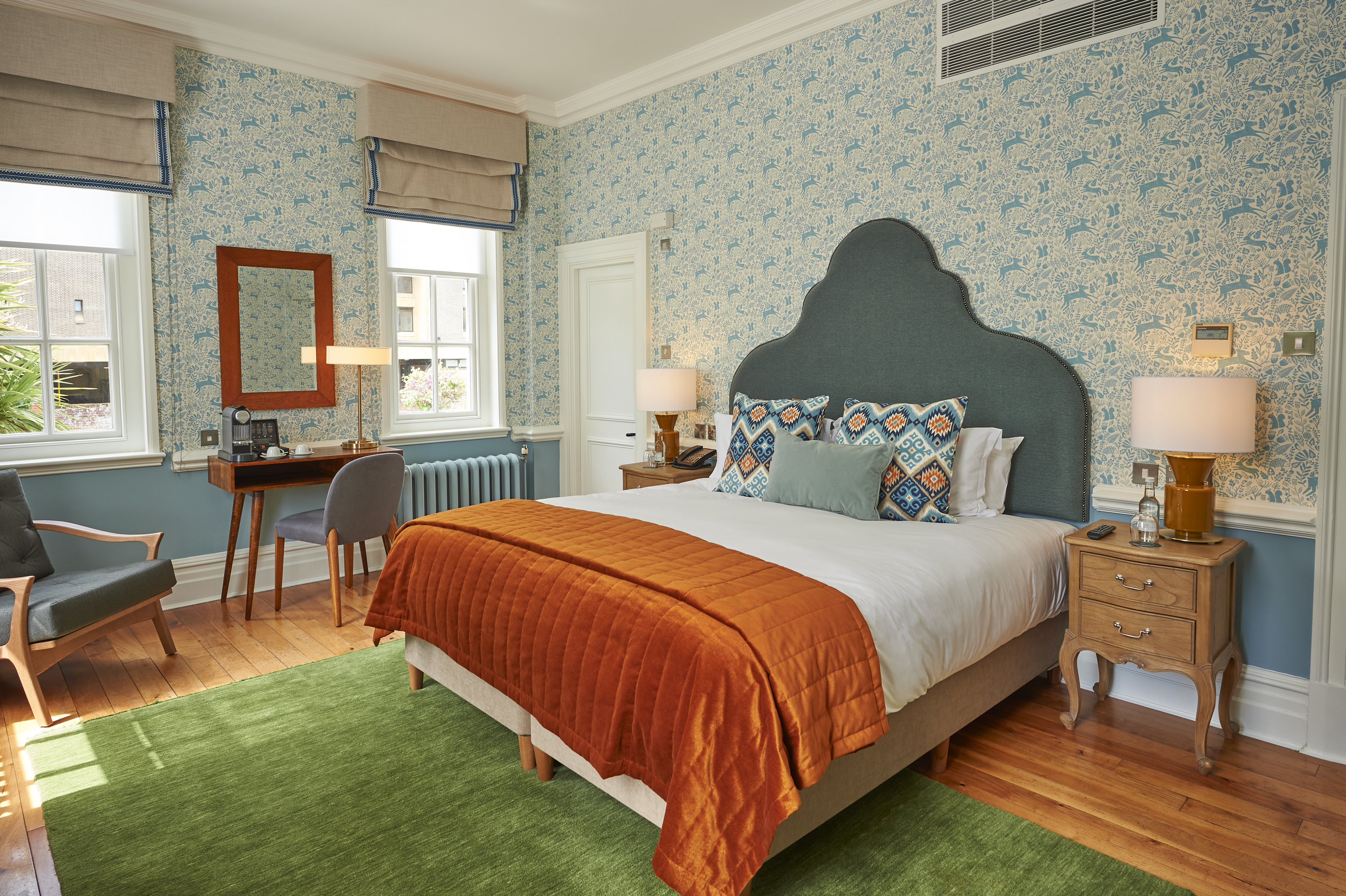
The cathedral close, the water meadows, independent dining along Jewry Street, and the quieter corners beyond it easily fill two unhurried days, without repeating a single view or crossing the same ground twice. Split across two mornings and two evenings rather than one long day, none of it feels rushed, and there's room left over for simply sitting somewhere quiet with a coffee or a glass of wine.
Hotel du Vin Winchester occupies a Georgian building dating to 1715, and as the first hotel in the group, it has had longer than any other to get the pace of a Winchester stay right. It suits couples wanting a slower kind of weekend just as well as leisure travellers who've done Winchester as a day trip before and know there was more to it than they had time for. For anyone weighing up things to do near Winchester too, the city's rail links make it just as easy to build a day out into the wider Hampshire countryside without giving up the Southgate Street base in between.
Winchester Long Weekends FAQs
Is Winchester worth more than a day trip?
It is, and the water meadows are usually the clearest proof of that. A day trip covers the cathedral and the High Street comfortably, but the walk out to St Cross, an evening spent properly exploring Jewry Street, and a morning in the cathedral's quieter corners between them take the better part of two days on their own. Rushing all of it into a single visit defeats the point of a city built for wandering rather than ticking off.
How long is the Keats' Walk to St Cross?
The round trip covers around two miles, mostly flat and well signposted along the water meadows, with each leg taking about 20 to 30 minutes at an unhurried pace. Allowing an hour or so in total, rather than treating it as a brisk there-and-back, leaves time to stop at the Hospital of St Cross rather than just passing it.
Is Winchester easy to reach from London?
Direct trains run regularly from London Waterloo, with the fastest services covering the route in under an hour and the average journey closer to an hour and twenty minutes. That makes a long weekend genuinely workable without a car, particularly since the cathedral close and most of the sights covered here sit within easy walking distance of the station.
For those who do drive, Hotel du Vin Winchester has 33 on-site parking spaces, though it's worth booking one in advance rather than assuming availability on arrival.
Is Winchester a good base for exploring Hampshire further?
It works well for that, given its rail links and central position in the county, though anyone treating it purely as a base risks underselling the city itself. Between the cathedral close, the water meadows, and the quieter corners covered here, Winchester holds enough on its own to fill a full weekend before Hampshire's wider countryside even comes into the plan.
Is Winchester a walkable city?
Very. The cathedral, the High Street, and Jewry Street all sit within a few minutes of each other, and most of what's covered in this piece can be reached on foot from Hotel du Vin's Southgate Street address. The one stretch worth preparing for properly is the walk out to St Cross along the water meadows, which calls for comfortable shoes rather than anything designed for city pavements.